
Most of the time, a toilet that randomly kicks on and runs is caused by a slow leak from the tank into the bowl. When enough water escapes, the float drops and triggers the refill valve; the tank fills back up, and the cycle repeats.
You’re walking past the bathroom and hear it happen even though no one touched the handle. It goes for a few seconds, then goes quiet again. It’s easy to ignore, especially if it seems to stop on its own. But a randomly running toilet can waste hundreds of gallons of water a month and may point to wear or damage inside the tank.
Here’s what we look for at InsideOut Inspections Plus, what’s usually causing it, and when it’s time to call someone in.
What Makes a Toilet Run by Itself?
A toilet runs by itself because a worn or misaligned part inside the tank is letting water leak or refill when it shouldn’t.
Several things can cause this:
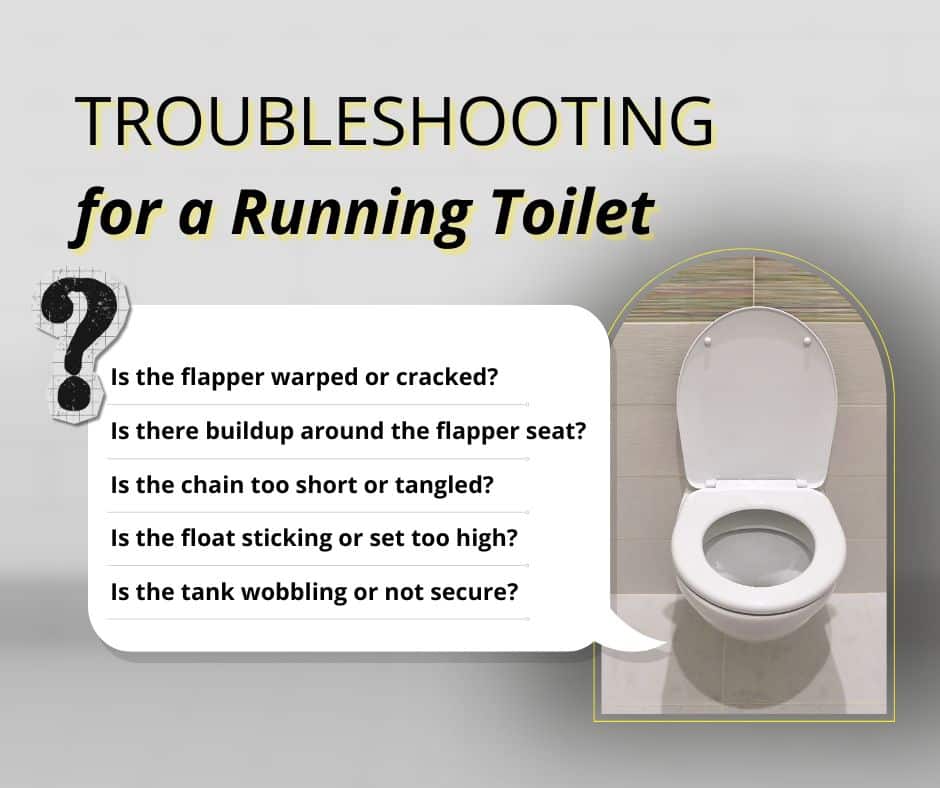
1. A worn-out flapper: The flapper is the rubber piece that lifts when you flush and seals the tank afterward. Over time, it can warp, crack, or lose flexibility. If it doesn’t seal tightly, water slowly leaks through.
2. A dirty or misaligned flapper seat: Even a good flapper can fail to seal if the spot it rests on has buildup or mineral deposits. That allows a slow leak and triggers a refill.
3. A stuck or deteriorating float: The float controls when the tank fills and stops filling. If it sticks or doesn’t rise fully, the fill valve may run longer than it should, or kick on again when it shouldn’t.
4. A leaky fill valve: Sometimes the fill valve itself fails, letting water leak continuously or intermittently into the bowl. You might not hear it every time, but the water bill will show it.
5. The water level is set too high: If the water level in the tank sits above the overflow tube, water constantly drains into the bowl. It may not always make noise, but the toilet is still refilling behind the scenes.

How to Test for a Silent Leak
Test for a silent leak by adding food coloring to the tank and checking the bowl a few minutes later without flushing.
- Remove the tank lid
- Add a few drops of food coloring to the tank water
- Wait 10 to 30 minutes without flushing
- Check the bowl for any color
If colored water shows up in the bowl, there’s a leak from the tank. The EPA’s WaterSense program uses this same test during its annual Fix a Leak Week campaign, and notes that a single running toilet can waste about 200 gallons of water per day.
Is It a Big Deal?
It depends on how long it’s been going on. A slightly worn flapper is an easy DIY fix. But if the running has been happening for weeks or months, it’s costing you.
That waste adds up on your water bill. It can also stress older plumbing or mask other issues, like a faulty shutoff valve.
During a home inspection, if we find a running toilet, we look at:
- The age and condition of the flapper
- Whether the fill valve is responsive
- Signs of hard water buildup or corrosion
- Water levels in the tank
- Any dampness around the base of the toilet
We note it on the report if it’s continuous or if it points to wear that should be addressed before closing.
Other Reasons a Toilet Might Randomly Run
A few less common causes we occasionally see:
- Toilet tank not secured properly: If it rocks or shifts when flushed, the internal parts may not line up correctly.
- Flush lever stuck in the open position: Sometimes the handle doesn’t reset fully, which leaves the flapper up just enough to keep water flowing.
- Worn or misaligned chain: If the chain between the flush lever and the flapper is too short or tangled, it can prevent the flapper from sealing.
These are usually easy to spot and fix during routine maintenance or a walk-through inspection.
Other Plumbing System Checks
A running toilet is often the most noticeable plumbing issue in a home, but it’s rarely the only one. During a full home inspection, we look at the whole system, not just the fixtures making noise.
- Water heater condition: age, corrosion on the tank, and signs of leaking at the base. A unit past its expected lifespan is worth flagging even if it’s still working.
- Supply line material and condition: older homes sometimes still have galvanized or polybutylene supply lines, both of which are prone to failure and worth pointing out.
- Water pressure: unusually high pressure stresses fixtures and connections throughout the house, including the parts inside a toilet tank.
- Shut-off valves: we check that the main shut-off and individual fixture valves actually turn and seal, since a valve that’s seized up turns a small leak into an emergency.
- Visible drain lines: corrosion, sagging, or old repairs under sinks and in crawl spaces or basements.
None of these show up the way a running toilet does. You won’t hear them. That’s exactly why they’re part of the inspection instead of something you’d catch on your own.
Common Plumbing Red Flags
A few patterns show up often enough that we treat them as reliable warning signs, even before we test anything.
- Water stains or discoloration under sinks: almost always point to a slow leak, active or past.
- Mismatched or amateur pipe repairs: patched-together fittings usually mean a DIY fix that didn’t fully resolve the original problem.
- Slow or gurgling drains throughout the house: can indicate a partial blockage or venting issue further down the line, not just a clog in one fixture.
- Sulfur or musty odors near fixtures: often trace back to a dry P-trap, a venting problem, or issues with a private well system if the home isn’t on municipal water.
- Fixtures added without visible permits or updates: newer additions, like a finished basement bathroom, are worth double-checking against what we typically find in new construction plumbing.
If your home is showing two or three of these at once, it’s usually more efficient to have the whole plumbing system looked at than to chase each symptom separately.
Related Questions to Explore
- Is it safe to use a toilet that runs occasionally? Yes, but it wastes water and may signal a problem that gets worse over time. It’s better to fix it before it turns into a bigger issue.
- Will this show up on a home inspection? Most likely. If a toilet is visibly or audibly running during a home inspection, it gets noted in the report along with any related observations.
- Can running toilets damage flooring or plumbing? If left unchecked, the extra water movement can stress valves or cause moisture buildup. It’s rare, but a small, ignored leak can eventually warp flooring or wear down plumbing.
- How often should I check my toilets? At least once every few months. Remove the tank lid, check for leaks or worn parts, and run the food coloring test if you’re unsure.
- What’s the difference between a running toilet and a leaking toilet? A running toilet keeps cycling water inside the tank and bowl, which shows up in your water bill but not necessarily on the floor. A leaking toilet means water is escaping the fixture itself, often around the base, and usually needs a plumber sooner.
When to Call a Professional
If you’ve replaced the flapper, adjusted the float, and lowered the water level, and your toilet still runs, it’s time to get help.
A plumber can quickly identify whether it’s a part failure or something deeper in your plumbing system. If you’re buying or selling a home and the toilet is running, don’t panic. It’s a common issue, and one that’s usually easy to fix once identified. During a home inspection, we’ll include it in the report if it’s active during the walkthrough, so everyone involved has the information they need.
Other Bathroom Signs Worth a Second Look
A running toilet is rarely the only thing worth checking. A few other bathroom signs point to issues an inspector can help track down:
- Soft or spongy flooring around the toilet or tub: usually means water has been getting into the subfloor.
- Water stains on the ceiling below a bathroom: a sign of a slow leak from plumbing or the tub/shower pan.
- Slow-draining sinks or tubs: can point to a clog now or a larger drain line issue later.
- Persistent musty smell: often traces back to hidden moisture behind walls or under flooring.
- Water heater short on hot water: worth a look alongside any plumbing concerns, since the two are often connected.
If you’re noticing more than one of these at once, it’s a good reason to have a sewer scope inspection rather than chasing each symptom on its own.
Conclusion
A randomly running toilet is usually a worn flapper, a misaligned float, or a fill valve that’s past its prime, and most of these are easy, inexpensive fixes. What matters is catching it early, since a leak that runs for months adds up in water bills and wear on the fixture.
At InsideOut Inspections Plus, we’re here to help homeowners and buyers across Michigan and Ohio understand what’s happening behind the walls and inside the tank.
If you’re hearing water kick on when no one’s around, schedule an inspection with us, and we’ll help you figure out why.
