
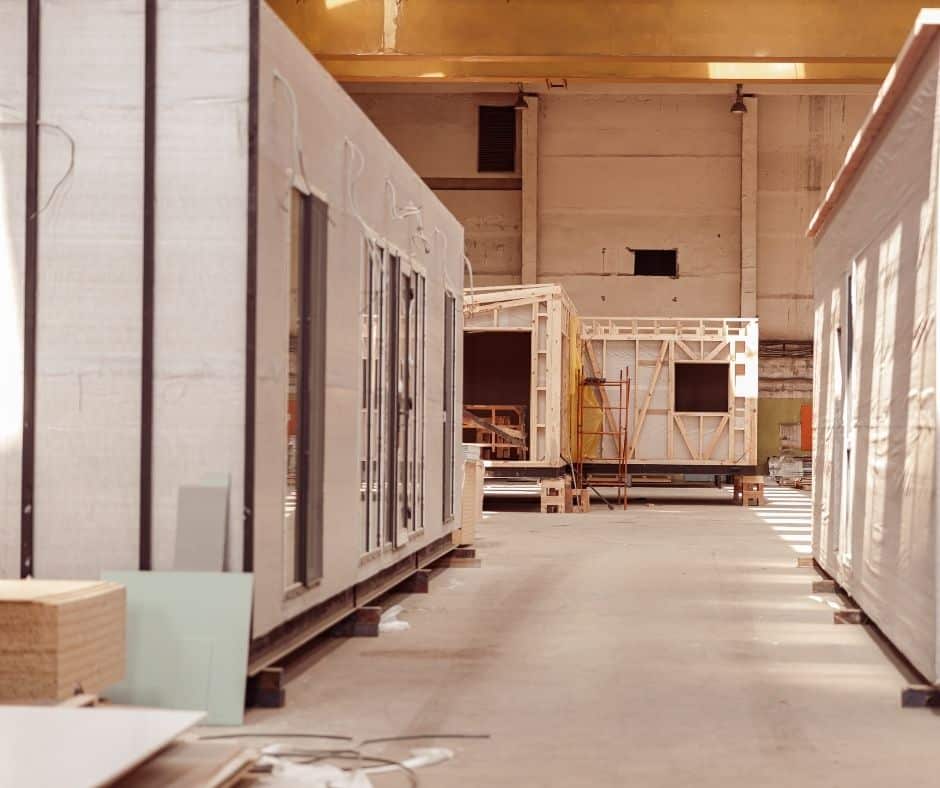
A manufactured home inspection checks the same core systems as any home inspection, plus items unique to factory-built housing: the steel chassis, the tie-down and anchoring system, the skirting and belly wrap, and the HUD data plate that proves the home meets federal construction standards.
At InsideOut Inspections Plus, we walk buyers through all of it before closing day arrives. Whether you’re buying a single-wide outside Toledo or a multi-section home near Monroe, here’s what our inspectors actually check, and how it differs from a standard home inspection.
What a Manufactured Home Inspection Actually Covers
A manufactured home inspection covers the roof, electrical, plumbing, HVAC, and interior, the same systems any house inspection covers, plus the structural elements specific to factory-built homes.
On a typical visit, we check:
- Roof and exterior: shingles or panels, flashing, gutters, and siding condition
- Electrical: panel condition, wiring type, GFCI protection, and grounding
- Plumbing: water heater, supply lines, drain lines, and fixture function
- HVAC: furnace or heat pump condition, ductwork, and ventilation
- Interior: doors, windows, flooring, and signs of moisture or settling
- Underneath the home: chassis, tie-downs, skirting, and the belly wrap
That last category is where a manufactured home inspection starts to look different from what you’d expect on a site-built house.
How It’s Different From Inspecting a Site-Built House
A site-built home sits on a poured foundation and follows local building codes. A manufactured home is built in a factory to a single federal standard, then transported and set on piers or a foundation system on-site. That changes what an inspector is looking for.
The HUD Data Plate and Certification Label
Every manufactured home built after June 15, 1976 carries a red HUD certification label on the exterior and a data plate inside, usually in a kitchen cabinet or electrical panel. These confirm the home was built to the federal Manufactured Home Construction and Safety Standards.
Homes built before that date are technically “mobile homes” rather than HUD-code manufactured homes, and they’re often harder to finance. We locate and photograph both during the inspection.
Chassis, Tie-Downs, and Anchoring
The steel frame, or chassis, runs the length of the home and needs to be free of rust, sagging, or impact damage. We also check the tie-down straps and anchoring system, since a home that isn’t properly secured is a safety and insurance issue, not just a cosmetic one.
The Marriage Line on Multi-Section Homes
Double-wide and larger homes are built in sections and joined on-site along what’s called the marriage line. We check this seam for gaps, separation, or water intrusion, since a poor connection here can lead to drafts, pest entry, or structural movement over time.
Manufactured Home Inspection vs. Typical Home Inspections
Side by side, the two inspections share most of their scope. The differences come down to what’s underneath the home and which standard it was built to.
| Factor | Manufactured Home Inspection | Typical Site-Built Home Inspection |
|---|---|---|
| Governing standard | Federal HUD Code | Local and state building codes |
| Foundation | Piers, blocks, or a permanent foundation system, with the home tied down | Continuous poured or block foundation |
| Unique structural checks | Chassis, tie-downs, marriage line, belly wrap, skirting ventilation | Foundation walls, footings, load-bearing walls |
| Identification document | HUD data plate and certification label | No equivalent document |
| Roof and siding | Same checks, plus attention to seams at section joints | Continuous roof and siding, no section seams |
| Typical timeline | Similar to a standard inspection; longer if a certification and engineer review are required | Standard inspection window |
| Common financing trigger | Often needs a full certification for FHA/VA/conventional loans | Standard inspection is usually sufficient |
The roof, electrical, plumbing, HVAC, and interior checks are nearly identical between the two. Where they diverge is everything happening below the floor line, which is exactly why an inspector familiar with manufactured housing matters.
Manufactured Home Inspection vs. Manufactured Home Certification
These two get confused often, and they’re not the same thing.
A manufactured home inspection is a general condition assessment, similar to a standard home inspection, used by buyers to understand what they’re purchasing.
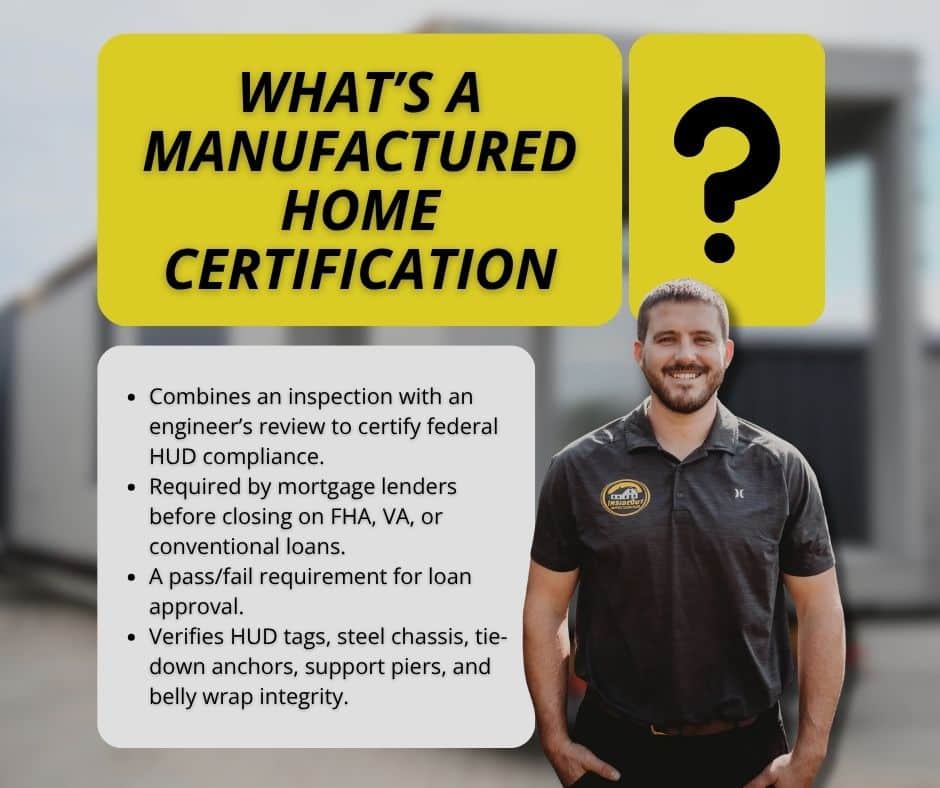
A manufactured home certification is a more formal process usually required by lenders for FHA, VA, or conventional financing. It combines an on-site inspection with an engineer’s review confirming the home meets HUD standards. If the certification uncovers issues, such as belly board damage or pier problems, those repairs typically need to be completed before the loan can close.
If you’re financing the purchase, ask your lender early which one they require. It affects both the timeline and the scope of what gets inspected.
Common Issues We Find During Manufactured Home Inspections
Some problems show up often enough in manufactured and mobile homes that we check for them on every visit.
- Belly wrap damage: The fabric or vinyl wrap under the home protects the insulation and ductwork from moisture and pests. Tears, sagging, or missing sections let water and rodents in, and repairs are almost always required before a certification can be approved.
- Pier and support settling: The home rests on a series of piers rather than a continuous foundation. If the ground shifts or a pier wasn’t set properly, you’ll see uneven floors, doors that stick, or gaps where the skirting meets the ground.
- Skirting gaps and ventilation issues: Skirting keeps out pests and cold air, but it also needs enough ventilation to prevent moisture buildup underneath the home. Too little airflow leads to condensation, mold, and faster corrosion on the chassis.
- Roof seams and transitions: Multi-section homes have roof seams where the sections meet. These are common spots for slow leaks, especially on older homes where the roof coating has worn thin.
- Duct disconnects underneath the home: Because the ductwork often runs under the floor rather than through interior walls, a disconnected or crushed duct is easy to miss without a proper underneath inspection, and it shows up as uneven heating or cooling room to room.
None of these are unusual for a home of this type. They’re simply the areas that need closer attention than they would on a site-built house, and catching them early keeps small repairs from turning into financing delays.
How to Prepare for a Manufactured Home Inspection
A little preparation on the day of the inspection helps us get a complete picture of the home and can shorten the process.
- Clear access to the crawl space or skirting access panel. If the underside of the home is blocked by stored items, landscaping, or debris, we may not be able to fully inspect the chassis and belly wrap.
- Have the HUD data plate location handy if you know it. It’s usually inside a kitchen cabinet, a bedroom closet, or near the electrical panel. If a previous owner painted over it or it’s missing, let us know ahead of time.
- Make sure utilities are on. We need working water, electricity, and gas or propane to test plumbing fixtures, the water heater, and the HVAC system.
- Gather any past repair or setup permits. Documentation of anchoring, skirting, or foundation work done since the home was placed on-site helps confirm what’s already been addressed.
- Ask your lender which report they need. If you already know you’ll need a full certification instead of a standard inspection, telling us in advance means we can schedule the engineer’s review right away instead of adding a second visit later.
Related Questions to Explore
- How much does a manufactured home inspection cost? Pricing is generally close to a standard home inspection, with an added fee if a full certification and engineer review is required for financing. Schedule with us for a quote specific to your home’s size and location.
- Can a manufactured home fail inspection? A home doesn’t “pass” or “fail” a standard inspection, but a certification can be denied until required repairs, like belly board damage or improper anchoring, are completed and re-verified.
- Do older mobile homes need the same inspection? Homes built before June 15, 1976 predate the HUD Code and are classified as mobile homes rather than manufactured homes. They still get a full condition inspection, but there’s no HUD data plate to verify, and financing options are typically more limited.
- How long does a manufactured home inspection take? Plan for a similar timeframe to a standard home inspection. Larger multi-section homes with a full certification review can take longer since the engineer’s review happens after the on-site visit.
- Do I need a certification to get financing? Most FHA, VA, and conventional lenders require a manufactured home certification before closing. Cash purchases and some local lenders may only require a standard inspection. Read more about our crawl space and structural inspection process for how these findings connect.
When to Call a Professional
If your inspection or certification turns up chassis rust, pier or foundation problems, or belly wrap damage, don’t wait to address it. These issues can affect both the home’s safety and your ability to close on financing.
InsideOut Inspections Plus handles the full certification process for buyers and lenders across Southeast Michigan and Northwest Ohio, including the on-site inspection, documentation, and coordination with the engineer’s review. If repairs are needed before closing, we’ll tell you exactly what has to be fixed and why.
Conclusion
A manufactured home inspection covers the same ground as any home inspection, with a few extra stops: the chassis, the tie-downs, the marriage line, and the HUD data plate. Knowing the difference between an inspection and a full certification can save you a scheduling headache later, especially if you’re financing the purchase.
If you’re buying a manufactured or mobile home in Michigan or Ohio, schedule an inspection or certification with InsideOut Inspections Plus, and we’ll walk you through exactly what we find.
