
If your home runs on a private well, the safety of your drinking water is entirely in your hands. Unlike municipal systems, residential wells are not monitored by any government agency, which means problems can develop quietly and go undetected for months or years. Most well issues are preventable when you know what to look for.
This post covers the most common residential water well problems that affect water quality, the warning signs homeowners often miss, and when to bring in a licensed inspector.
Why Residential Well Water Quality Is Your Responsibility
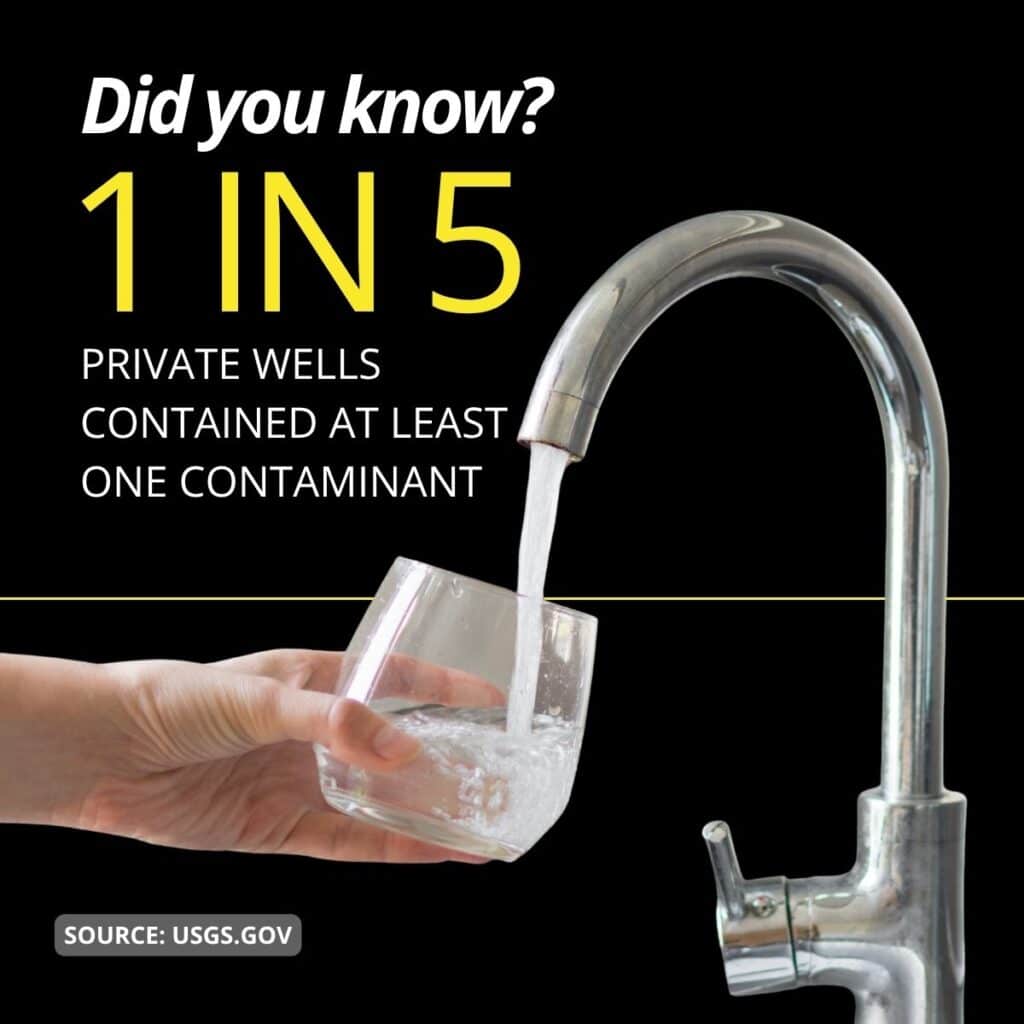
Private wells are not covered under the Safe Drinking Water Act. According to the U.S. Environmental Protection Agency, roughly 23 million U.S. households rely on private wells for drinking water, and a USGS study of 2,100 wells found that about one in five contained at least one contaminant above a human-health benchmark.
For homeowners in Southeast Michigan, Northwest Ohio, and Northern Michigan, local geology, agricultural land use, and aging well infrastructure all create conditions where water quality can shift without any visible signs. The only reliable way to know what is in your water is to test it.
Structural Problems and Contamination
The physical condition of your well is the first line of defense against contamination. When structural components fail, surface water, soil, and runoff can reach your water supply directly.
Damaged or Corroded Well Casing
The well casing is the pipe that lines the borehole and protects groundwater from surface-level contamination. Over time, steel casings corrode. Older homes may have casings that are cracked, separated at a joint, or no longer extend far enough above the ground surface to keep runoff out.
A damaged casing is one of the most serious well problems.
It allows surface water, sediment, bacteria, and chemicals from nearby land activity to bypass the natural filtration of the soil and reach your water supply.
If your home is older and the well has never been inspected, casing condition is one of the first things a professional should evaluate.
Improper Well Cap or Seal
The well cap sits at the top of the casing and is designed to keep out insects, debris, rodents, and surface water. Caps that are cracked, missing, or improperly fitted are a common entry point for contamination. Heavy rainfall can wash surface runoff directly into an uncapped or poorly sealed casing.
During a well inspection, the condition of the cap and surface seal are checked as part of the standard visual assessment. It is one of the lower-cost fixes that can have a real impact on long-term water quality.
Biological Contamination
Coliform bacteria, including E. coli, are among the most common health-related findings in residential well water. Bacteria can enter a well through surface intrusion, flooding, a damaged casing, or a failing nearby septic system.
Here is the part that catches most homeowners off guard: contaminated well water can look, taste, and smell completely normal.
Per the CDC’s guidelines on testing well water, private well owners should test for total coliform bacteria at least once a year, along with nitrates, total dissolved solids, and pH. More frequent testing is recommended for households with young children, elderly residents, or pregnant individuals.
In our service area, homes near older septic systems or properties that have experienced flooding or standing water near the wellhead are at elevated risk. A positive coliform test does not always mean the water is immediately dangerous, but it does mean the source needs to be identified and addressed before the problem worsens.
Local Chemical Contaminants
Beyond bacteria, several chemical contaminants show up regularly in residential wells across Southeast Michigan, Northwest Ohio, and Northern Michigan. Here is a quick overview of the most common ones:
| Contaminant | Source | Health or Nuisance? | Detectable by taste/smell? |
| Nitrates | Agricultural runoff, septic systems | Health risk | No |
| Coliform bacteria | Surface intrusion, flooding, septic | Health risk | No |
| Iron | Natural geology | Nuisance (staining) | Sometimes (metallic taste) |
| Hydrogen sulfide | Natural groundwater chemistry | Nuisance (odor) | Yes (rotten egg smell) |
| Hard water (calcium/magnesium) | Natural geology | Nuisance (scale) | No |
| Lead/arsenic | Old plumbing, natural deposits | Health risk | No |
Nitrates From Agricultural Runoff
Nitrates are a documented concern throughout the Maumee watershed and agricultural areas of Northwest Ohio and southern Michigan. Fertilizers, animal waste, and septic discharge can all introduce nitrates into groundwater. They move easily through soil and produce no taste or odor.
High nitrate levels are a particular concern for infants. Elevated nitrates can cause methemoglobinemia, sometimes called “blue baby syndrome,” which can be fatal in very young children.
Adults typically do not show symptoms, which is one reason nitrate contamination often goes undetected on properties where no one has tested the water.
Our water quality testing services include laboratory analysis shipped overnight to an EPA-approved lab, so you get accurate results on the specific contaminants relevant to your area.
Iron, Sulfur, and Hard Water
Iron staining on sinks, toilets, and laundry is one of the most visible signs of a water quality issue in Michigan wells. A sulfur or rotten egg odor signals hydrogen sulfide in the groundwater. Hard water, high in calcium and magnesium, causes scale buildup in water heaters, dishwashers, and pipes over time.
These are nuisance issues rather than direct health hazards, but they shorten the lifespan of appliances and affect daily water use. A water test identifies exactly what is present so treatment is targeted rather than guesswork.
Signs Your Residential Water Well May Have a Problem
Not every well problem announces itself with a dramatic change. Watch for these warning signs and take action promptly if you notice them:
- Cloudy, discolored, or off-tasting water. Any sudden change in appearance, taste, or smell warrants testing right away.
- Orange or black staining in toilets, sinks, or laundry (iron or manganese).
- Low or fluctuating pressure. This can point to pump problems, pressure tank failure, or sediment in the well screen.
- Air or sputtering at the faucet. Trapped air may signal a pump issue or a damaged drop pipe.
- Flooding or heavy rain near the wellhead. Surface water intrusion risk spikes significantly after major weather events.
- Rotten egg or chemical smell. This typically indicates hydrogen sulfide, or in some cases, a sign of nearby contamination.
- Nearby activity changes. New agricultural operations, a neighbor’s septic failure, or construction can shift local groundwater quality.
Many contaminants, including bacteria and nitrates, produce none of these signs at all. Annual testing remains the only reliable safeguard.
Related Questions to Explore
- How often should a residential water well be tested? At minimum, once a year for bacteria, nitrates, pH, and total dissolved solids. InsideOut Inspections Plus offers water quality testing with EPA-approved lab analysis, and results typically returned within a few business days.
- Can well water look fine and still be contaminated? Yes. Bacteria, nitrates, lead, and arsenic produce no visible change in water. A clear, normal-tasting sample can still exceed safe limits. Laboratory testing is the only way to know for certain.
- What are the most common contaminants found in residential wells? The most common health risks are coliform bacteria, nitrates, lead, and arsenic. The most common nuisance issues are iron, hardness, and hydrogen sulfide. Michigan and Ohio wells frequently show elevated nitrates and iron due to local agricultural activity and geology.
- How do I know if my well casing is damaged? Look for new sediment or cloudiness, sand at the tap, a sudden pressure drop, or soil slumping near the wellhead. A professional well inspection includes a full structural assessment of the casing, cap, and seal.
- What is the difference between a well inspection and water quality testing? A well inspection evaluates physical components: casing, cap, pump, and pressure tank. Water quality testing analyzes the water itself for contaminants. They are separate services, and doing both gives you the most complete picture of your well’s condition.
- Does flooding affect residential water well quality? Yes. Floodwater can carry bacteria, sediment, and agricultural chemicals directly into a well if there’s a bad wellhead. After a significant flood event, stop using the water for drinking and schedule a test before resuming use.
When to Call a Professional
Here is when a licensed inspector makes a real difference over a DIY approach:
- Buying or selling a home with a private well. FHA, VA, and USDA loans often require a professional well inspection as part of the transaction.
- No inspection on record, or the last one was more than two years ago.
- Any of the warning signs above have appeared: pressure changes, taste or smell shifts, staining, or air in the lines.
- Recent flooding, nearby construction, or changes in local agricultural activity.
- Establishing a baseline before investing in a water treatment system.
InsideOut Inspections Plus provides professional well inspections and water quality testing across Southeast Michigan, Northwest Ohio, and Northern Michigan, including Monroe, Toledo, Detroit, and Kalkaska.
Our team collects water samples from your home and ships them overnight to an EPA-approved laboratory. Most reports are delivered the same day as the inspection.
Conclusion
Residential water wells are reliable and cost-effective, but they require your attention to stay safe. The issues that matter most are ones you often cannot see or taste. Here is a quick summary:
- Structural issues (damaged casing, cracked or missing cap) allow surface contamination to bypass natural soil filtration.
- Biological contamination from bacteria and coliform can exist in clear, normal-tasting water.
- Chemical risks like nitrates are invisible without testing and pose real health risks, especially for infants.
- Annual testing is the only reliable way to confirm your well water is safe.
If you are not sure when your last well inspection or test was, that is the right place to start. Schedule a well inspection or water quality test with InsideOut Inspections Plus.
