
The crawl space is one of the least-visited parts of any home and one of the most revealing. It sits between the ground and the floor above, quietly collecting evidence of moisture problems, structural wear, and pest activity that nobody notices until an inspector goes down there.
Most homeowners never see their own crawl space. That is exactly why crawl space findings so often come as a surprise, and why they can look very different depending on the type of home and the type of inspection being performed.
Here is how crawl space conditions show up across three different inspection types and what each one looks for.
Why Crawl Spaces Are a Big Deal in the Midwest U.S.
Crawl spaces in this part of the country carry more risk than in warmer, drier climates. Michigan and Ohio winters bring heavy snow, hard freezes, and spring thaws that push moisture into and around foundations in ways that cause real damage over time.
A few specific conditions inspectors see consistently across the region:
- Moisture getting in: When snow melts, or heavy rain falls, water saturates soil around foundation walls and works into unprotected crawl spaces. Standing water and damp ground turn up regularly in older homes throughout the surrounding communities
- Soil movement from freezing: Frozen ground expands. That movement puts pressure on the posts and supports holding up the floor above
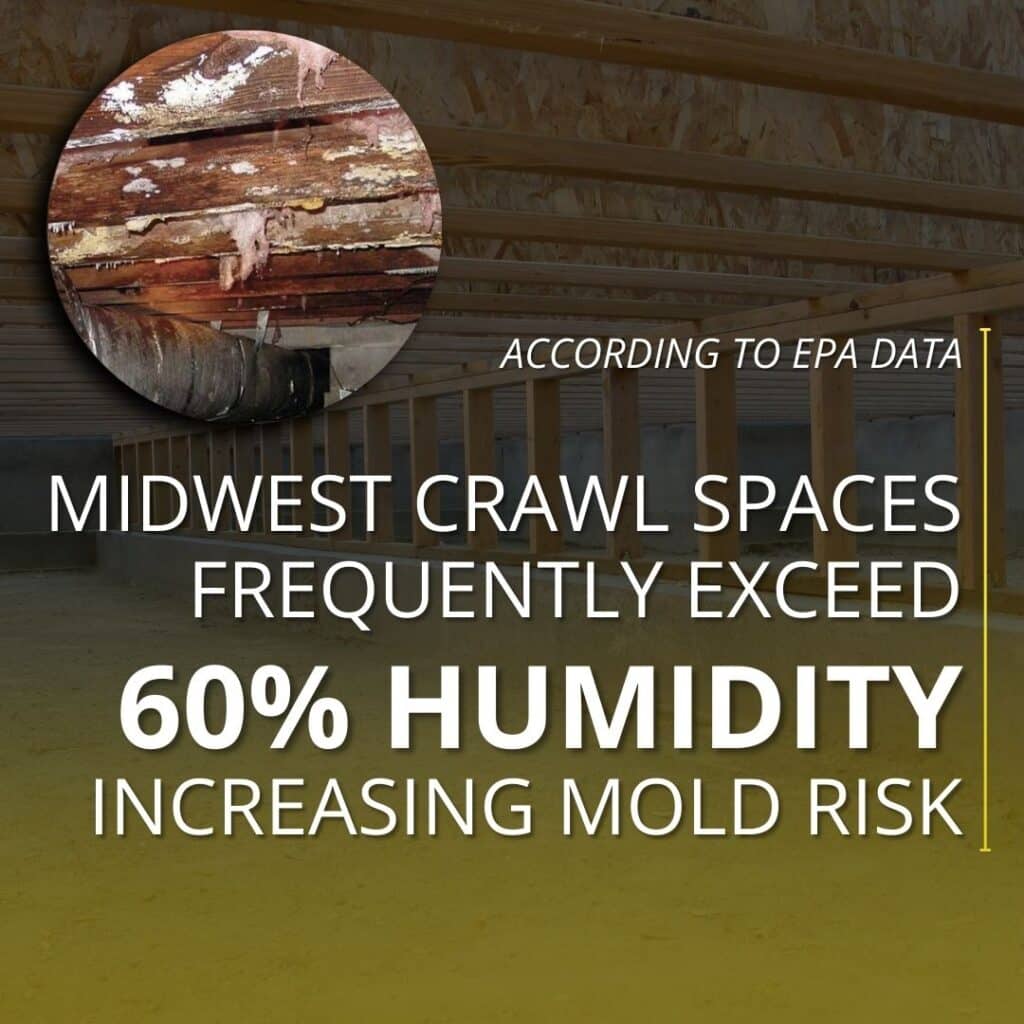
- Condensation buildup: Warm air from inside the home hits cold crawl space surfaces and leaves moisture behind. Over time, that moisture feeds mold and softens wood
- Pests: Damp, dark, undisturbed crawl spaces attract wood-destroying insects and rodents
None of this shows up inside the living space right away. A crawl space evaluation catches it before it becomes a much bigger problem.
What Shows Up in a Standard Home Inspection?
A standard home inspection covers everything accessible and visible in the home. When a crawl space can be safely entered, it is part of that scope. Here is what inspectors look at down there.
The Foundation Walls and Support Posts
Inspectors look for cracks, white powdery deposits left by water, and any signs that walls are shifting or leaning.
They also check that the posts holding up the floor beams sit properly and show no signs of rot or movement. In Michigan and Ohio homes, these rank among the most common crawl space findings.
The Floor Structure Above
Looking up from the crawl space gives inspectors a clear view of the underside of your floors.
Sagging areas, softening or deteriorating wood, insulation that has fallen down, and staining from past moisture all show up from below in ways they simply do not from above.
Moisture and Ground Cover
Inspectors note whether a vapor barrier covers the crawl space floor and whether the space shows signs of past water.
Many older Michigan and Ohio homes have bare soil crawl spaces with no ground cover, which lets ground moisture rise directly into the space.
Plumbing, Ducts, and Wiring
Supply lines, drain pipes, and ductwork often run through the crawl space. Inspectors check their condition and flag anything that looks damaged, unsupported, or out of place.
Signs of Pest Activity
Obvious evidence of wood-destroying insects or rodents goes into the inspection report. A dedicated pest inspection goes further, but the standard inspection catches the clear warning signs.
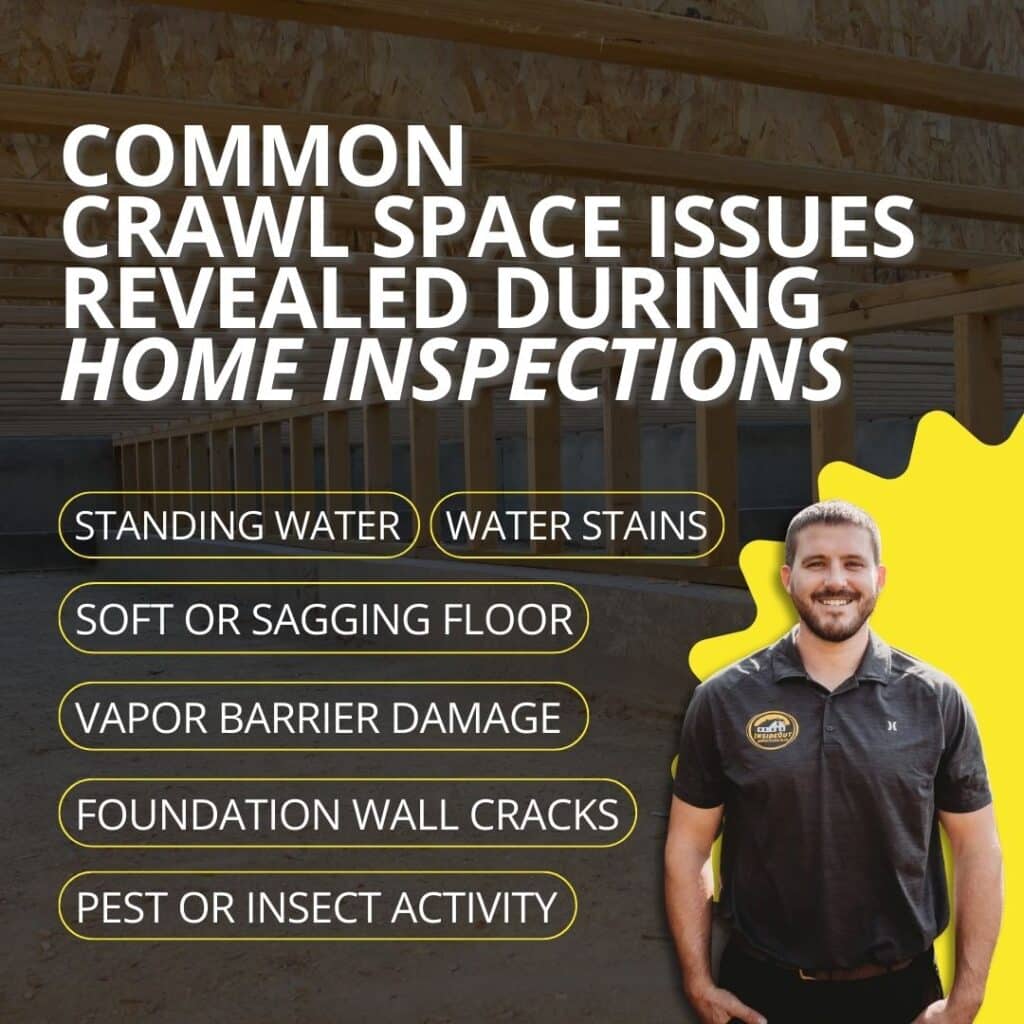
| Common Finding | What It Usually Means |
| Standing water or staining | Drainage problem, moisture getting in |
| Soft or sagging floor structure | Wood rot or long-term moisture damage |
| Missing or fallen insulation | Age, moisture damage, or pest activity |
| Cracks in foundation walls | Soil pressure, frost movement, or settlement |
| Pest evidence | Conditions that need a closer pest evaluation |
What Shows Up in a Manufactured Home Certification?
Manufactured homes sit differently from site-built homes, and the space underneath them works a bit differently, too.
Most manufactured homes in Michigan and Ohio sit on a steel frame above a protective layer called the belly board. This material wraps the underside of the home and keeps moisture and animals out of the floor structure and insulation above it.
What Inspectors Look at Underneath a Manufactured Home
- The belly board: Tears, holes, or sections that have dropped away expose the insulation and floor structure to whatever sits underneath the home
- The support system: Manufactured homes sit on piers with tie-down anchors. Inspectors check whether these are properly placed and secure, which affects both safety and financing eligibility
- Moisture beneath the home: Ground cover, condensation, and any standing water under the chassis all get evaluated
- Pipes and ducts: Utilities running beneath the home get checked for condition and damage
Why This Matters for Buying a Manufactured Home
Buyers using an FHA, VA, or conventional loan to purchase a manufactured home almost always need a manufactured home certification. This combines an on-site inspection with an engineer review that confirms the home meets federal housing standards.
Findings underneath the home, including belly board damage, pier problems, or moisture, can require repairs before the certification clears and the loan closes.
InsideOut Inspections Plus handles the full certification process, including on-site inspection, documentation, and engineer review throughout Michigan and Ohio.
What Shows Up in a Structural Inspection?
A structural inspection goes deeper than a standard home inspection on questions of structural integrity. Buyers or homeowners typically request one when a standard inspection flags foundation cracks, floor movement, or framing concerns that need a more detailed answer.
The crawl space is frequently where those answers live. InsideOut holds licensed builder credentials in both Michigan and Ohio, which means structural evaluations draw on real construction knowledge, not just visual observation.
What Gets a Closer Look?
- Foundation wall movement: Rather than simply noting a crack, a structural evaluation measures it. Inspectors use levels and tools to determine whether a wall bows inward, how far it has moved, and whether the crack pattern suggests active pressure or an older stable issue.
- Beams, posts, and connections: The main beam running down the center of most crawl spaces, the posts that hold it up, and the connections to the foundation all get evaluated closely. Rot, improper bearing, and prior repair attempts that may not have fixed the underlying cause are all documented.
- Floor system sag and deflection: Inspectors measure how much the floor structure has moved over time. Doubled-up joists from past repairs get noted and evaluated for whether they actually addressed the original problem.
- Water history in the structure: Staining patterns and wood discoloration tell the story of how long moisture has been present and how far it has traveled. A structural inspection reads those patterns in context rather than simply noting that staining exists.
Related Questions
Can crawl space conditions affect radon levels in the home?
Yes. Radon rises from soil and enters homes through crawl space floors and foundation gaps. Testing is the only way to know whether levels in your home are a concern.
Can mold grow in the crawl space without any signs showing inside?
Yes, and it is common. Mold develops on wood framing in damp crawl spaces long before anything appears in the living space above. A mold and air quality test identifies what is present even when nothing is visible.
What is a manufactured home certification, and when is it required?
It is an inspection and engineer-reviewed process confirming a manufactured home meets federal housing standards. Most lenders require it for FHA, VA, and conventional financing, and the underside of the home is a core part of what gets evaluated.
When does a standard inspection lead to a structural inspection?
When the standard inspection flags foundation cracks, floor movement, bowing walls, or other concerns that need a more detailed answer before a buyer or owner can make informed decisions.
What other services are commonly added to a home inspection?
Radon testing, sewer scope inspections, well inspections, mold and air quality testing, pest inspections, septic inspections, and water quality testing are all available as add-ons, depending on the property type and what the standard inspection discovers.
When to Call a Professional
If you are buying a home in Southeast Michigan, Northwest Ohio, or Northern Michigan and the property has a crawl space, getting a thorough evaluation of it is one of the most important parts of the process.
What inspectors find in the crawl space often shapes the negotiation, the repair budget, and the long-term maintenance plan.
For manufactured homes, the underside evaluation is not optional when financing is involved. For homes where the standard inspection raises structural questions, a dedicated structural evaluation provides the clarity needed to move forward with confidence.
InsideOut Inspections Plus serves Southeast Michigan, Northwest Ohio, Northern Michigan, and the surrounding communities.
Conclusion
The crawl space does not get much attention until something goes wrong. In Michigan and Ohio, where freezing winters, clay soil, and seasonal moisture create consistent pressure on the spaces beneath homes, a thorough crawl space evaluation is one of the most valuable parts of any inspection.
Whether you are going through a standard home inspection, a manufactured home certification, or a structural evaluation, what turns up in the crawl space often tells the most important part of the story.
InsideOut Inspections Plus has the experience and credentials to evaluate it fully across all three. Schedule your inspection today.
